
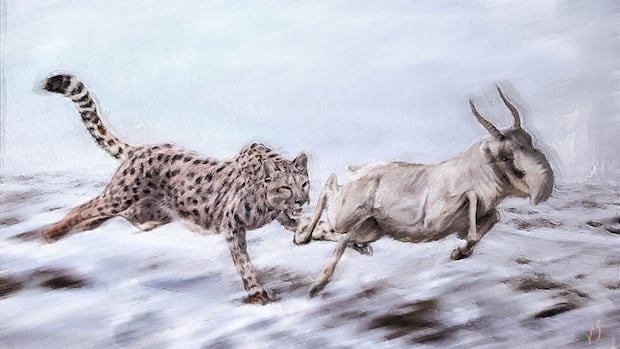
A recent discovery in northern Yukon initially led experts to believe that remains found in the Bluefish Caves and a local mine site belonged to an ice-age puma or cougar. However, a DNA analysis conducted by the University of California revealed a surprising twist. Molly Cassatt-Johnstone, a lab technician at the time who had just completed her undergraduate studies, was astonished to find that the bones did not match those of pumas. Instead, they were identified as cheetahs.
The revelation marked a significant breakthrough, as the bones were attributed to a Yukon Miracinonyx, also known as the extinct American cheetah. This groundbreaking discovery led to the publication of a research paper in Current Biology, shedding new light on the ice-age cat’s dietary habits and habitat.
Researchers were perplexed by the presence of American cheetahs in the Arctic tundra, as they were traditionally believed to have specialized in hunting American pronghorn antelope in grassy plains. However, the absence of pronghorn in Beringia, the land bridge connecting Asia and North America, posed a mystery.
To unravel this enigma, scientists conducted stable isotope analysis on bone samples from the cheetahs’ paws and legs. The findings revealed that the Yukon cheetahs predominantly fed on fish, a behavior uncommon among past and present-day felines. This dietary preference was attributed to the abundance of Yukon salmon, offering the cheetahs a convenient food source amidst competition from larger predators in the region.
Further genetic analysis indicated that Miracinonyx was more closely related to North American pumas than African cheetahs. The study also highlighted the low genetic diversity and limited adaptive potential of the cheetah population, which may have contributed to their eventual extinction.
Grant Zazula, a Yukon paleontologist, proposed renaming the unique northern population from ‘American Cheetah’ to ‘Yukon Cheetah’ to reflect their distinct habitat and dietary preferences. This discovery underscores the ongoing revelations in paleontology and the importance of every bone found in unraveling the mysteries of the past.