
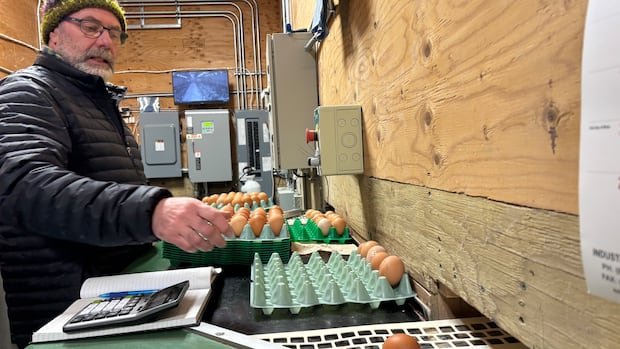
Alan Stannard has been vigilant round the clock in recent weeks, overseeing his 4,400 chickens at Mandalay Farms and Little Red Hen Eggs in Whitehorse. Stannard compared his nighttime checks to inspecting a home for drafts in the cold. The frigid temperatures in December, reaching as low as -50 C in parts of Yukon, can cause humidity issues in the barn, potentially leading to health problems like pneumonia and impacting egg production.
Inside a large barn equipped with automatic heaters, ventilators, and other devices, Stannard can remotely monitor everything through his cellphone. The system alerts him instantly to any malfunctions such as frozen ventilation or propane issues, regardless of the time of day. Despite his experience farming in the North for over two decades, sudden extreme cold snaps like the one experienced in early December present challenges that require immediate attention.
Managing humidity buildup and ensuring proper ventilation is crucial to prevent health risks to the chickens. Stannard explained the manual adjustments needed to maintain optimal conditions for the birds amidst fluctuating temperatures. Power outages are another major concern, as they can disrupt essential operations like heating, egg collection, and refrigeration. To mitigate this risk, two backup generators are in place at the barn.
While the chickens may be confined indoors during harsh weather, Stannard ensures they are comfortable and safe. He mentioned occasional squabbles among the birds, but overall, they are coping well with the conditions. Stannard emphasized the importance of not letting the chickens outside unless temperatures are above -10 C and winds are calm to prevent frostbite on their combs, which can lead to aggression among the flock.
Despite the cold weather challenges, Stannard reported that none of the chickens have perished due to the extreme conditions. Amber Elliot, a livestock technician with the Yukon Government, highlighted that while livestock rarely die directly from cold temperatures, stress induced by the weather can exacerbate underlying health issues. Limited veterinary services in the area make it crucial for farmers to prioritize shelter, feeding, and watering to ensure the well-being of their animals during extreme cold spells.