
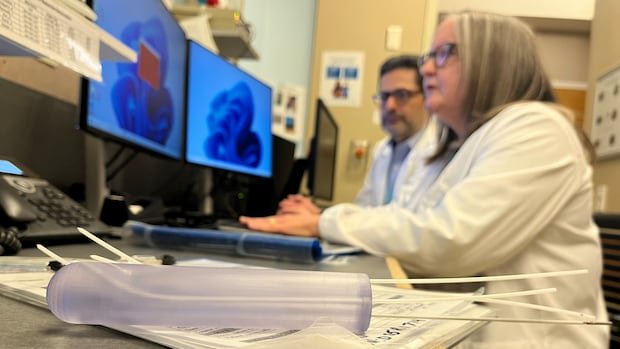
In a cluttered laboratory at the B.C. Cancer center in Kelowna sits a 3D printer that appears more suited to an artist’s studio or an engineering company. However, healthcare professionals describe it as a groundbreaking tool for treating cervical, vaginal, and recurrent endometrial cancers in Canada.
Dr. Deidre Batchelar, a medical physicist involved in the project, expressed how the idea originated from a desire to improve radiation treatment for underserved patients. After years of fundraising and collaboration with a graduate student, Batchelar acquired the necessary equipment and developed specialized software to manage it.
Utilizing individual MRI and CT scans, the 3D printer fabricates personalized applicators for brachytherapy, a type of internal radiation treatment. Unlike standard applicators, which may not suit the complex anatomy of gynecological cancers, these custom-made tools conform precisely to each patient’s body and tumor contours, significantly enhancing treatment accuracy.
Dr. Hamad Raziee, a radiation oncologist at B.C. Cancer Kelowna, emphasized the benefits of these bespoke applicators, noting that they enable higher tumor radiation doses while safeguarding surrounding tissues, leading to improved outcomes. Furthermore, the precision of the custom applicators reduces the need for multiple needles, making the procedure less invasive and more comfortable for patients.
The success of the 3D-printed applicator was demonstrated in 31 procedures conducted by B.C. Cancer Kelowna in 2025. The acquisition of the $60,000 printer was made possible through support from the B.C. Cancer Foundation, which aids in acquiring advanced medical technologies for cancer treatment centers.
Acknowledging the significance of their innovation, Dr. Batchelar mentioned receiving a B.C. Cancer Excellence Award for teamwork. Currently, Batchelar and the team in Kelowna are collaborating with brachytherapy facilities in Vancouver, Victoria, and Abbotsford to implement similar programs, further advancing cancer treatment in the region.
The initiative not only promotes innovation but also expedites the availability of advanced treatments to cancer patients.