
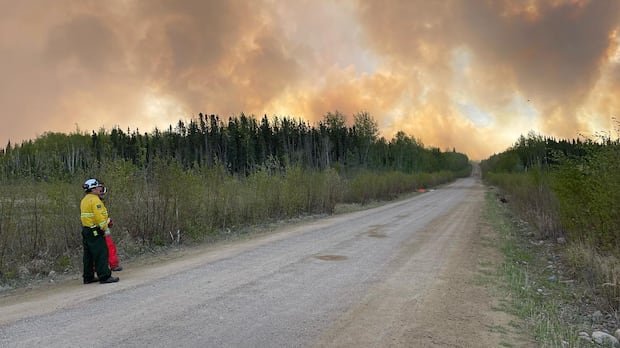
Harley Vliegenthart, a local volunteer firefighter, vividly recalls the intense battle against a devastating wildfire that swept through Denare Beach in northeastern Saskatchewan last summer. The inferno consumed half of the tranquil lakeside community, including Vliegenthart’s childhood home. Working tirelessly on the front lines, he faced the menacing Club fire while the larger Wolf fire ominously encircled the area unbeknownst to many until it was too late. Despite the peril, Vliegenthart refused to retreat until the mandatory evacuation order was issued.
Reflecting on the traumatic experience, Vliegenthart expressed the profound emotional toll it took on him and the community. The aftermath left a trail of despair and loss, with over 240 families in Denare Beach losing everything they had worked for throughout their lives. The devastation was part of a larger crisis, as wildfires ravaged 2.9 million hectares of Saskatchewan’s forests last year, displacing thousands and destroying over 450 homes across multiple locations in the province, as reported by the Saskatchewan Public Safety Agency (SPSA).
As experts warn of a potentially severe wildfire season ahead, Colin Laroque, an environmental science professor at the University of Saskatchewan, highlighted the critical environmental conditions that could exacerbate the risk. A dry fall followed by an atypical winter has left the province vulnerable, with low soil moisture levels and compacted snowpack that may hinder spring moisture penetration. Laroque cautioned about the looming threat of “zombie fires,” which can smolder underground and reignite in the spring, underscoring the need for enhanced preparedness.
In response to the escalating wildfire risks, the provincial government allocated an additional $20 million to the SPSA in the recent budget, bringing the total firefighting budget to $140 million. Despite the financial strain from last year’s unprecedented wildfire season, Finance Minister Jim Reiter acknowledged the need for continued investment in wildfire prevention and response measures.
Looking ahead, experts advocate for proactive strategies such as prescribed burns to mitigate wildfire hazards and promote ecosystem health. Eric Lamb, a plant sciences professor at the University of Saskatchewan, emphasized the importance of embracing fire as a natural ecological process and implementing preventive measures like prescribed burns. While prescribed fire cannot avert all wildfires, it can help reduce the severity of future blazes and enhance landscape resilience.
In Denare Beach, residents are gearing up for potential challenges by enhancing their firefighting capabilities and disaster preparedness. With climate change exacerbating wildfire risks, Vliegenthart stressed the necessity of collaborative efforts between communities and authorities to adapt to the evolving threat landscape. Planning for the future, he emphasized the importance of unity and proactive measures to safeguard against the mounting perils posed by wildfires in a changing climate.