
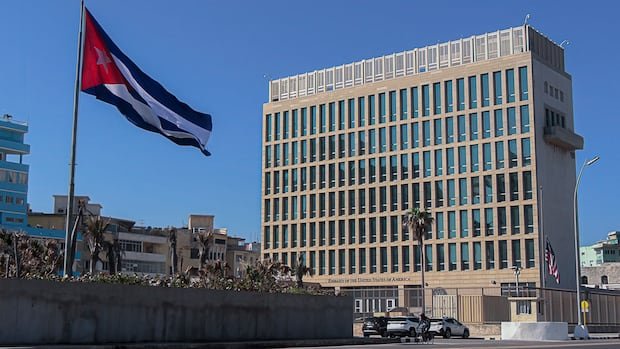
The United States has recently imposed financial sanctions on a large business conglomerate controlled by Cuba’s military and a joint venture in mining between Cuba and Canada. This move is part of the Trump administration’s efforts to increase pressure on the communist leadership of Cuba by targeting foreign investment sources.
After the capture of the leader of Venezuela, a close ally of Cuba, in a military operation in January, President Donald Trump indicated that Cuba would be the next target. The U.S. administration has also restricted oil shipments to Cuba, exacerbating power shortages on the island.
In a recent executive order signed by Trump, further sanctions were imposed on Cuba, which President Miguel Díaz-Canel criticized as coercive. The order specifically targets Grupo de Administracion Empresarial S.A. (GAESA), a military conglomerate that reportedly controls a significant portion of Cuba’s economy, along with its Executive President Ania Guillermina Lastres Morera.
Additionally, the sanctions extend to Moa Nickel SA, a joint venture between Sherritt International Corp based in Toronto and Cuba’s state-owned nickel company. This action undermines one of Cuba’s main sources of foreign currency, according to statements from U.S. Secretary of State Marco Rubio.
The Trump administration has also limited U.S. travel and remittances to Cuba, discouraged regional allies from hiring Cuban doctors, and pressured Sherritt to suspend its joint venture activities in Cuba. Sherritt has announced the immediate suspension of its direct involvement in joint ventures in Cuba and is repatriating its expatriate employees from the country.
Cuba’s Foreign Ministry condemned the new U.S. sanctions as aggressive and in violation of international law, urging the international community to address what it sees as a dangerous escalation by the United States.
The U.S. has persistently called for Cuba to open its state-controlled economy, compensate for expropriated properties, and hold fair elections. However, Cuban officials have rejected these demands, stating that their socialist government is non-negotiable. They blame the economic and social challenges in Cuba on decades of U.S. sanctions.
In response to the recent sanctions, Rubio emphasized the Trump administration’s commitment to ensuring Cuba’s communist regime does not pose a threat to national security in the region. The sanctions were announced following Rubio’s discussions with military officials at the U.S. Southern Command and a meeting with Pope Leo at the Vatican, who has advocated for dialogue between the U.S. and Cuba.
Experts at the UN have criticized Trump’s fuel blockade on Cuba, warning that it could lead to severe consequences for the island nation’s development and human rights.