
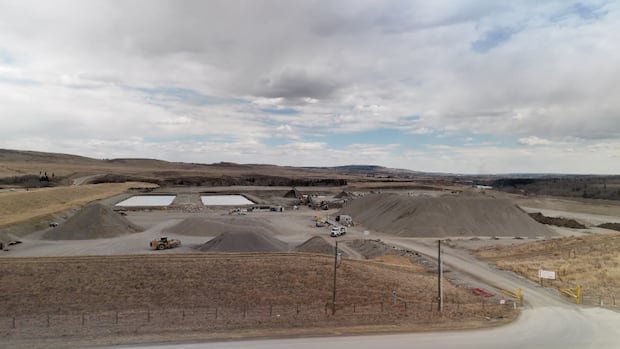
Seven local residents in Cochrane, Alberta are in a legal battle with the provincial government regarding a gravel pit operated by BURNCO Rock Products Ltd., a Calgary-based company. The pit, established in 2016, spans an area equivalent to about 100 football fields and is located uphill from the Bow River, approximately a hundred meters away at its closest point.
In 2023, the provincial government granted approval for BURNCO to expand the pit’s footprint by approximately five times its current size. BURNCO has assured that only a portion of the larger site will be actively mined at any given time, with plans in place to restore the land gradually to its original state as pasture and farmland.
Concerns have been raised by local residents regarding the potential environmental impacts of the operation, particularly in relation to groundwater risks. The dispute has shifted focus to the water use approval issued by the province for the expanded site in 2024, currently under review by the provincial Environmental Appeals Board (EAB). The Stoney Nakoda Nation has also joined the appeal, expressing concerns about potential adverse effects on the groundwater, surface water, and wetlands in the vicinity.
Apart from the seven residents challenging the water use approval, the Town of Cochrane, Rocky View County, and Stoney Nakoda Nations have been granted intervenor status in the appeal process. While the Town of Cochrane has not opposed BURNCO’s project, it has emphasized the need for further clarity and assurances to fully grasp and manage any potential impacts of the pit.
Rocky View County’s stance on the matter remains undisclosed as they did not respond to inquiries. The City of Calgary, although initially apprehensive about the pit’s impact on Bow River water quality in 2022, later concluded that the risk was minimal following discussions with BURNCO in the subsequent year.
The appellants argue that the current provincial regulations do not adequately assess environmental risks before permitting such projects to proceed. They advocate for an independent, audited environmental impact assessment (EIA) to be mandated for BURNCO’s operations, highlighting the outdated nature of existing regulations.
BURNCO has submitted various studies to the province, including a wetland assessment and plans for stormwater management, erosion control, and reclamation. However, the appellants insist on a more comprehensive evaluation through an EIA, which is a mandatory requirement for certain large-scale projects under provincial environmental protection legislation, but gravel pits have been exempted from this requirement since 2020.
Despite assertions from BURNCO that they have adhered to all provincial environmental permitting processes, the appellants contest the project’s water use approval, citing significant personal costs and efforts involved in challenging the operation. Critiques of the appeal system and its impact on public participation in early project stages have also been raised, emphasizing the need for a more structured approach to address environmental concerns within the community.
The environment ministry maintains that the current regulations offer a balanced approach to safeguard the environment, emphasizing the multiple avenues available for public input while ensuring a fair and focused process. The appeal board has not paused BURNCO’s water use approval, allowing the company to proceed with its operations amid ongoing legal proceedings. Alberta Environment and Protected Areas declined to comment on the Cochrane West gravel pit dispute due to the active appeal process.