
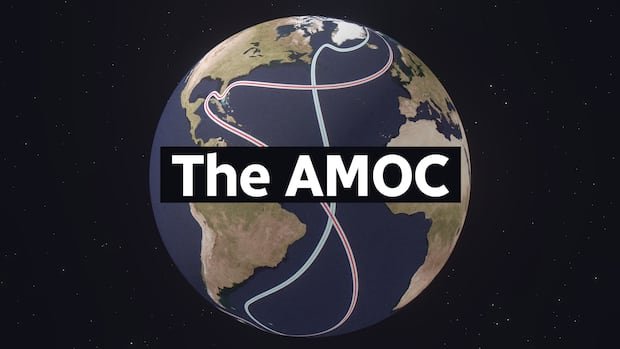
Scientists are growing increasingly worried about the slowdown of the Atlantic Meridional Overturning Circulation (AMOC), a crucial part of the global ocean current system. AMOC acts as a conveyor belt, transporting heat, water, and carbon around the world, influencing weather patterns and marine life sustainability. Research indicates that over the past two decades, the AMOC has decelerated by 10 to 20 percent, with projections suggesting a potential 51% decline by 2100 under moderate greenhouse gas emission scenarios.
Experts emphasize that the slowdown could have disastrous global consequences, affecting agriculture, food production, climate, ecosystems, and sea levels. The weakening of AMOC would lead to more intense winter storms in Atlantic Canada, impacting weather patterns and marine life. Despite uncertainties surrounding the exact timing of these changes, recent studies compare climate models against real-time data, indicating a potential irreversible tipping point by the end of the century.
Efforts to mitigate these risks include adhering to the Paris climate agreement and transitioning away from fossil fuels. Researchers stress the need for continued data collection and analysis to better understand and prepare for the impending impacts of AMOC slowdown and potential shutdown on global and regional scales.