
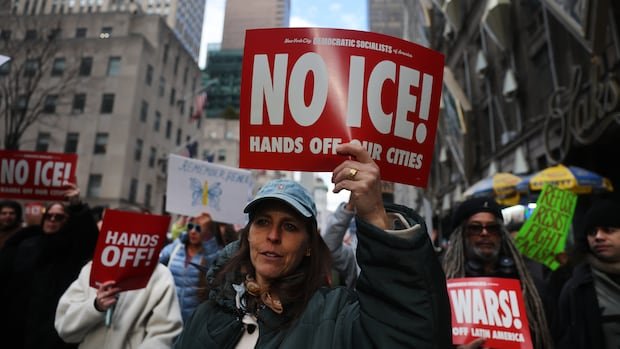
A fresh menace to law enforcement is on the loose in American streets. These individuals are enraged, organized, and, according to a conservative commentator, they even carry wine.
In a recent column on Fox News, David Marcus highlighted the presence of “organized gangs of wine moms” in the tragic death of Renee Nicole Good at the hands of immigration officers in Minneapolis. Marcus criticized the behavior of “self-important White women” who, in his view, confuse civil disobedience with criminal activities, ultimately leading to Good’s untimely demise.
The column sparked immediate online reactions, shedding light on a broader concerning narrative unfolding in current U.S. politics. Shana MacDonald, a communication expert at the University of Waterloo, emphasized that the response to Good’s death and dissenting views on the administration’s strategies reveal a troubling trend in the administration’s rhetoric.
MacDonald pointed out that the administration is employing language to portray certain groups as public enemies, exemplified by President Donald Trump’s labeling of protesters as “professional agitators” and ICE agents as “patriots.” This linguistic shift, echoed by supportive news outlets, is raising red flags about the evolving narrative surrounding dissent and opposition.
The aftermath of Good’s tragic death saw conflicting narratives emerge, with Trump and DHS Secretary Kristi Noem asserting that the ICE officer acted in self-defense, while Democratic officials accused the administration of deceit. Noem went as far as labeling Good’s actions as “domestic terrorism,” with Trump and Vice-President JD Vance condemning her behavior in disparaging terms.
Despite the Fox News column being just one opinion piece, it reflects a pattern of scapegoating protesters to justify harsh responses or violence against U.S. citizens, according to Michelle Chen, a communications scholar at Brock University. Chen highlighted this tactic as a diversionary strategy to deflect attention from the underlying issues at hand.
Amidst the controversy, mothers in Minneapolis have taken to social media to express their concerns and experiences with ICE crackdowns in their neighborhoods. These women are voicing their fears and frustrations, debunking stereotypes like being labeled as “wine moms” and asserting their right to be heard and understood.
The trend of vilifying protesters to shape public opinion is not new, with historical examples like the BLM movement facing similar negative portrayals. However, the current focus on so-called wine moms as adversaries marks a disturbing shift in targeting a previously valued demographic for political narratives and agendas.
In conclusion, the evolving discourse surrounding Good’s death and the characterization of protesters underscore a broader societal shift in how dissent and activism are perceived and responded to, emphasizing the need for critical analysis of language and messaging in shaping public opinion.