
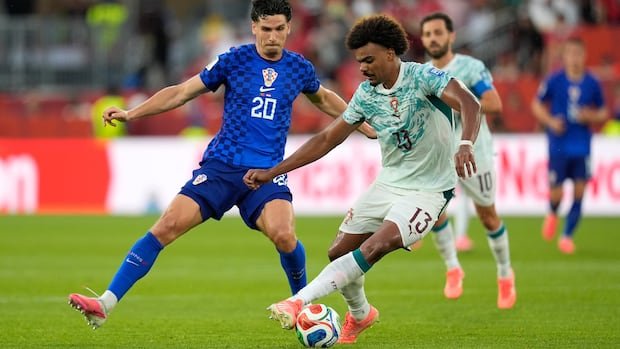
Toronto experienced sweltering conditions during the final World Cup match between Portugal and Croatia, nearing the threshold where soccer guidelines recommend delaying games due to extreme heat. Several matches in the tournament had already been postponed for player health concerns. The ambient temperature in downtown Toronto during the game was 27°C, with 67% humidity making it feel like 35°C, as reported by Environment Canada. Earlier in the day, temperatures peaked at 35°C with humidity making it feel like 42°C, prompting the cancellation of a popular public viewing event at Nathan Phillips Square.
FIFPRO, representing professional footballers, has set guidelines based on the wet bulb globe temperature (WBGT). According to these guidelines, if WBGT exceeds 28°C or the ambient temperature surpasses 36°C, games should be postponed for safety reasons. The WBGT at the start of the Toronto match was estimated to be close to 28°C. Kate Hutchins, a postdoctoral researcher, emphasized the importance of these guidelines as soccer players generate significant metabolic heat while playing, hindering the body’s cooling mechanism.
WBGT considers the cooling effect of sweat on the body. When humidity levels are high, sweat evaporation becomes less efficient. The body’s ability to cool itself through sweating diminishes significantly under such conditions, posing a threat to health. Hutchins highlighted the critical threshold when the wet-bulb temperature matches or exceeds body temperature, making it challenging for the body to regulate its temperature effectively. The relationship between WBGT and Humidex was also explained, with both readings indicating extreme heat levels in southern Ontario and Quebec.
Failure to cool the body properly can lead to a rise in core body temperature, affecting performance and safety. Hutchins cautioned against heat-related illnesses like heat stroke and exhaustion, emphasizing the importance of recognizing symptoms such as dizziness and lightheadedness. No specific temperature threshold for postponing World Cup matches has been set by FIFA, but concerns about player health and safety persist. FIFPRO plans to address heat-related issues in more detail at an upcoming news conference.