
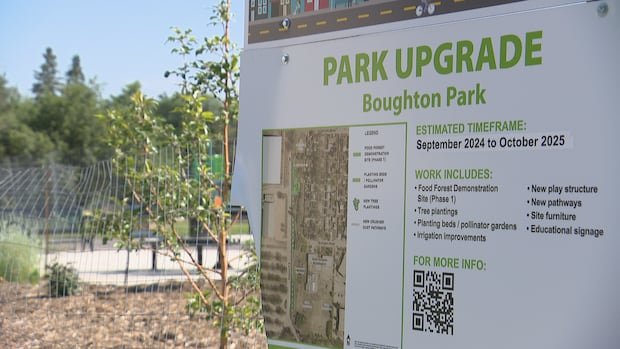
Saskatoon city hall is implementing a novel approach to combat the increasing issue of food insecurity. Through the introduction of food forests in two parks on the west side, the city is conducting pilot projects that are anticipated to yield tangible results in approximately two years.
The concept of food forests traces back to ancient times within Indigenous communities in the Americas. Saskatoon’s initiative involves planting trees and shrubs bearing fruits and vegetables to provide nutritious food for those in need. Shannon Dyck, a sustainability specialist with the City of Saskatoon, expressed that while these two food forest projects may not entirely resolve food insecurity challenges, they aim to offer a potential solution to the problem.
The pilot projects are currently underway at Broughton Park in the Holiday Park neighborhood and Leif Erickson Park in Westmount. These locations were selected due to the lack of nearby grocery stores, with approximately 15% of households in Holiday Park and double that percentage in Westmount classified as low-income.
The idea for these experiments stemmed from community input into Saskatoon’s green infrastructure plan, with residents providing valuable feedback on the project design and plant selection. The parks will feature a variety of edible plants such as saskatoon berries, raspberries, haskaps, strawberries, rhubarb, asparagus, apples, plums, apricots, and pears.
Both food forests will undergo maintenance and watering over the next two years before being accessible to the public. If successful, the project may be expanded to other areas of the city. The endeavor is financially supported by a $360,000 investment, with 60% covered by a federal infrastructure grant and the remaining portion funded by the city.
Laurie O’Connor, the executive director of the Saskatoon Food Bank and Learning Centre, commended the city’s forward-thinking pilot project, emphasizing the importance of cultivating accessible food sources for all community members. The rising food bank usage in Saskatoon, along with the increasing cost of food affecting a broader population, underscores the urgency of addressing food insecurity issues in the region.
Data from this year’s Food Bank Canada poverty report cards revealed that Saskatchewan surpasses the national average in both poverty rate (11.6%) and food insecurity rate (26.7%). Additionally, Saskatoon’s point-in-time homeless count conducted last October identified 1,931 individuals in need of assistance.