
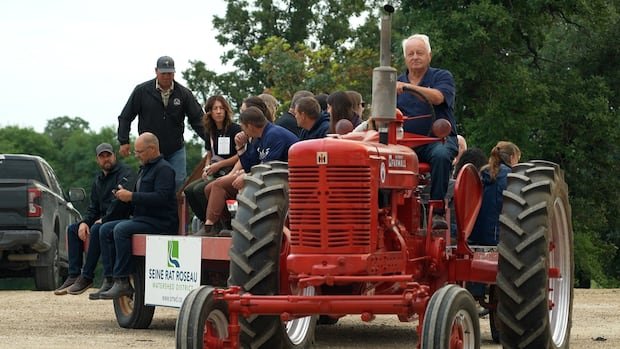
In the midst of summer, Manitoba farmers have encountered floods, dust storms, and tornadoes. The non-profit organization, Alternative Land Use Services (ALUS), recently hosted a group of 100 individuals from various parts of Canada in Steinbach. The purpose was to showcase ALUS’s efforts in minimizing the impact of severe weather events, which have become more frequent due to climate change.
ALUS’s CEO, Jordan Sinclair, emphasized that farmers play a crucial role in land stewardship and can effectively implement conservation projects on private lands. During the ALUS National Field Conference in southeast Manitoba, Sinclair visited four farms, including Marsh River Farms in Montcalm, where owner Harold Janzen expressed astonishment at a recent windstorm that deposited silty dust on his property.
Janzen, who also serves as a Montcalm councillor, highlighted the importance of ALUS’s programs in preserving land quality amid weather challenges. ALUS chose Manitoba as the conference location, as it was where the organization originated two decades ago with a single farm. Today, ALUS collaborates with 2,400 farms across six provinces.
The collaborative approach with farmers has been instrumental in ALUS’s success, as Sinclair noted that showcasing successful conservation projects encourages other farmers to participate. Janzen echoed this sentiment, emphasizing the benefits of implementing shelter belts, water retention ponds, and native grasses to enhance land resilience and profitability.
ALUS’s initiatives focus on protecting less productive land to enhance the overall health of farming operations. Through partnerships with organizations like the Seine Rat Roseau Watershed District, farmers like Royden Loewen have been able to establish diverse ecosystems that benefit local wildlife and contribute to a healthier environment.
The positive impact of these conservation efforts was evident during the tour of Loewen’s farm, where guests observed butterflies, insects, and wildlife thriving in the reclaimed ecosystem. For farmers like Loewen, creating a harmonious balance between agriculture and nature is not only beneficial for their operations but also contributes to the beauty and sustainability of the land.
Overall, ALUS’s farmer-centric approach and emphasis on environmental conservation are driving positive changes in Manitoba’s agricultural landscape, demonstrating the importance of sustainable practices in the face of climate challenges.