
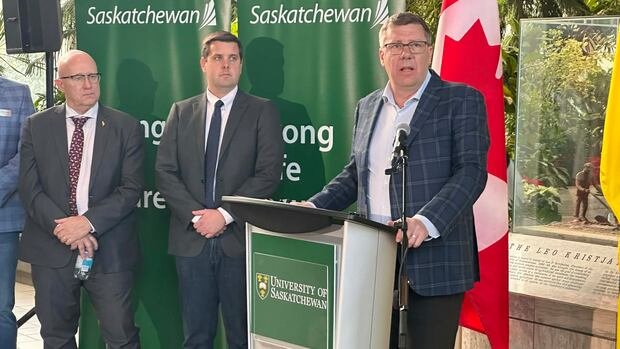
Canada and China have agreed to eliminate tariffs on canola meal and peas in a preliminary deal. Premier Scott Moe disclosed the specifics of the agreement during a press conference in Saskatoon. The agreement is set to come into effect by March 1, with canola seed tariffs expected to drop to 15 percent.
Last year, China imposed a 100 percent tariff on Canadian canola oil, meal, seeds, and peas. In return for China’s tariff reductions, Canada will lower tariffs on Chinese electric vehicles, as announced in a recent agreement.
Premier Moe, accompanied by provincial ministers of agriculture, trade and export development, and industry stakeholders, made the announcement at the University of Saskatchewan. Moe emphasized the significant impact of the deal on the Saskatchewan agriculture industry, which accounts for 55 percent of the nation’s canola production.
The canola sector alone employs over 200,000 Canadians and contributes $44 billion to the economy annually. Moe hailed the preliminary agreement as a crucial and positive decision for both the province and the country.
Saskatchewan agriculture stakeholders highlighted the challenges faced by farmers due to the 2025 tariffs. Dean Roberts, chair of the SaskOilseeds board of directors, noted the substantial decline in canola trade value with China following the punitive duties. He emphasized the need for stable market access for producers, particularly with the upcoming 2026 growing season.
Stuart Lawrence, chair of the Saskatchewan Pulse Growers board of directors, welcomed the removal of 100 percent tariffs on Canadian peas, citing positive implications for pea growers in the province and nationwide. Lawrence expressed optimism that the tariff removal would revive pea trade with China, a key market for Canadian peas.
Premier Moe praised Prime Minister Mark Carney’s leadership in international trade negotiations and emphasized the importance of strong federal-provincial collaboration in advancing Canada’s trade interests. He highlighted the preliminary tariff agreement as a beneficial step for future trade discussions, including those related to electric vehicles and the automotive sector.
The Government of Saskatchewan affirmed its commitment to strengthening relations with trading partners, including China, to facilitate market access for various sectors such as canola oil and pork.