
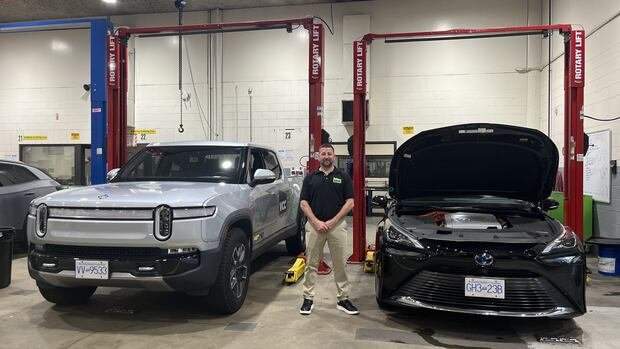
In our weekly environmental newsletter, we delve into the latest trends and solutions driving us towards a more sustainable future. Recently, I had the opportunity to explore Vancouver Community College’s auto shop, where they are educating apprentices on electric vehicles. This led me to investigate the training efforts for the next generation of automotive technicians further.
This week’s highlights include the growing presence of electric vehicles (EVs) on the roads, raising concerns about the availability of skilled mechanics to maintain them. Canada aims for 75% of new vehicle sales to be EVs by 2035 to align with its goal of achieving net-zero emissions by 2050.
A recent report by Pollution Probe points out significant gaps in training and certification for technicians to service electric school buses, emphasizing the need for expertise in high-voltage safety, battery diagnostics, and charging infrastructure. The lack of standardized training and certification poses a challenge for both new technicians and existing professionals in the automotive service industry.
Marc Saleh, Pollution Probe’s director of transportation, emphasizes the necessity of upskilling technicians to address the evolving demands of EV maintenance. The industry faces obstacles in training technicians due to the absence of universal certification standards and ongoing training requirements.
To address these challenges, independent auto shops and colleges are taking proactive steps. NAPA AutoPro shop in Hamilton has initiated an EV training program called Next Drive to educate technicians on various aspects of electric vehicles, including high-voltage repairs. Similarly, institutions like Vancouver Community College and Centennial College are enhancing their clean energy programs to meet the surging demand for EV maintenance services.
The push for integrating EV content into trade curricula and providing specialized training for technicians reflects the industry’s commitment to supporting the transition to electric mobility. This strategic focus on skill development is crucial for ensuring a sustainable future in the automotive sector.
As the EV landscape evolves, the emphasis on training skilled technicians becomes paramount to enable a seamless transition to cleaner energy solutions and drive innovation in the automotive industry.