
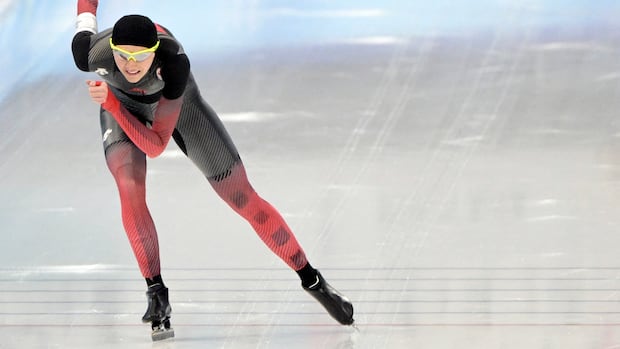
As the most accomplished Olympic team in Canada, boasting 42 Olympic medals and over 150 world championship medals throughout its history, the expectations for the Canadian speed skating team are perpetually elevated.
Italy holds significant sentimental value for Canadian speed skaters. At the Torino Games two decades ago, Canada secured eight medals, with five of those coming from the legendary Cindy Klassen.
Will the same enchantment be present at Milano-Cortina 2026?
During the current World Cup season, Canadian speed skaters have earned 18 medals (including two gold, nine silver, and seven bronze) across five events. In the previous Olympic cycle, they achieved remarkable success at the world single distance championships, clinching seven medals in 2023, a record-setting ten in 2024, and four in 2025.
On the international front, the Netherlands, the home of speed skating, is expected to present a formidable team in all disciplines once again. The Dutch team won 12 medals at the Beijing Games four years ago, with half of those being gold.
Jordan Stolz is a name that will be frequently mentioned during the Milano-Cortina Games. The 21-year-old prodigy from Kewaskum, Wisconsin, is anticipated to compete for four individual gold medals in Italy, potentially placing him in the realm of Eric Heiden (the American athlete who achieved five individual gold medals in Lake Placid in 1980).
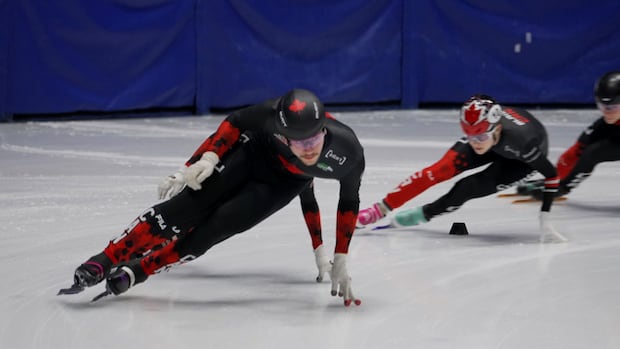
Canada’s short-track speed skating team conducted a practice session in Montreal just under two weeks prior to the Winter Olympics commencing in Italy. Regarded as Canada’s strongest team in decades, the athletes are grappling with the mounting pressure to secure gold at Milano Cortina 2026.
Stolz participates in the 500m, 1,000m, and 1,500m events and is set to include the mass start in his lineup as well.
A significant query surrounding the competition is the quality of the ice.
The Milano Speed Skating Stadium represents the first indoor temporary speed skating oval. It has been constructed inside the Fiera Milano Rho exhibition center, which is a trade fair facility located on the outskirts of the city.
Given the complexity of this project, event organizers sought out Mark Messer, renowned for having created the ice surfaces for six Olympic speed skating events and currently serving as the ice technician at the Calgary Olympic Oval.
“This has been one of the toughest challenges I’ve faced in ice making,” Messer stated to the Associated Press.
Here’s what you should know about Team Canada and the speed skating events in Italy:
Experience of Veterans
Ted-Jan Bloemen stands as the oldest member of the Canadian team at 39 years old.
The two-time Olympic medalist from the 2018 Pyeongchang Games did not reach the podium at Beijing 2022. However, since then, he has earned two medals at the world single distance championships (a silver in the 10,000 in 2024 and a bronze in the 10,000 in 2023).
This season, he captured a spirited World Cup silver medal in the 5,000 on home turf in Calgary.
Laurent Dubreuil from Levis, Quebec, is the most accomplished male sprinter since Jeremy Wotherspoon, with over 50 medals accrued on the World Cup circuit. Heading into his third Olympic Games, the Olympic silver medalist in the 1,000m from Beijing aims to secure a medal in his signature 500m event.
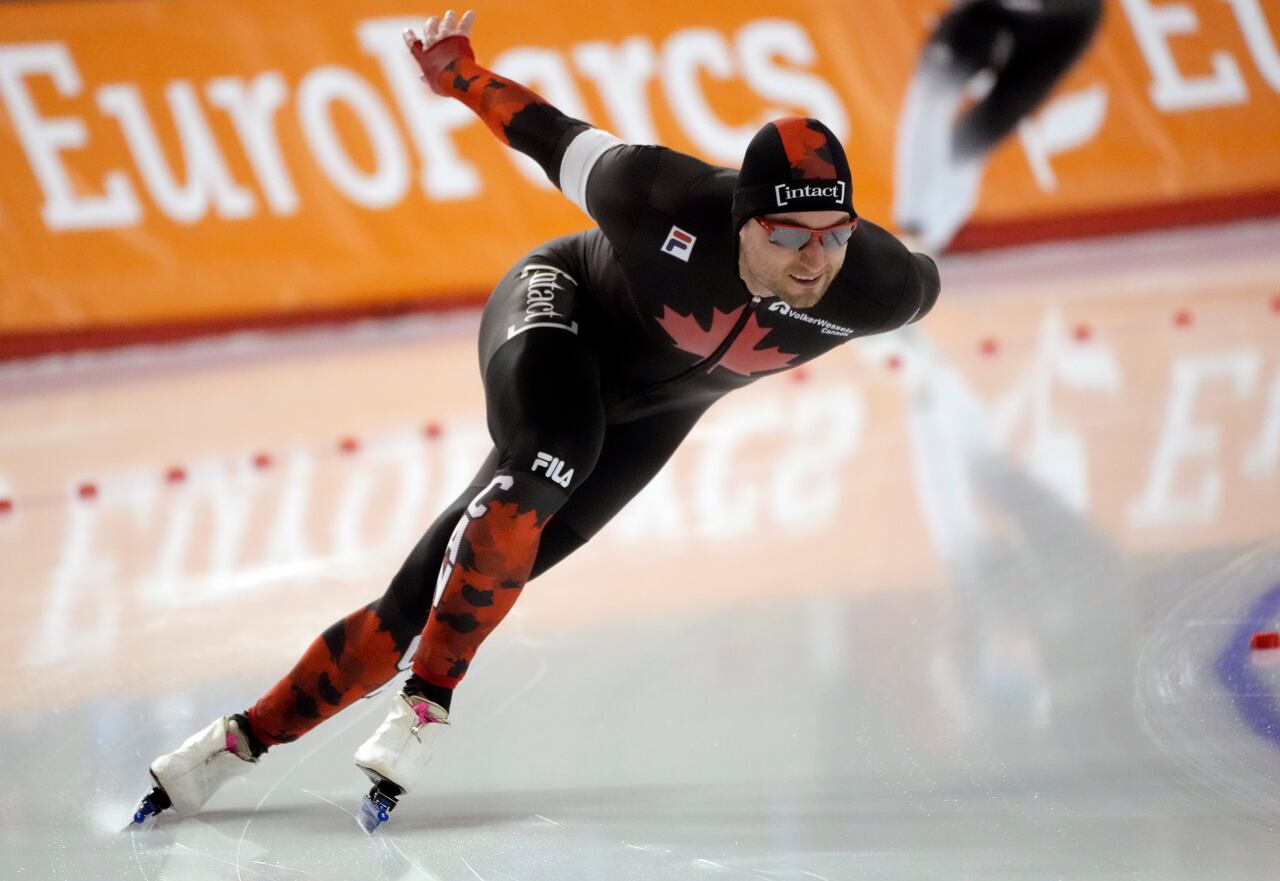
Laurent Dubreuil, a native of Lévis, Quebec, seen competing in 2025, is set to participate in his third Olympic Games this month at Milano-Cortina 2026. (Todd Korol/The Canadian Press)
At 34, he takes pride in being the oldest participant in his event.
On the women’s side, Valerie Maltais is making her remarkable fifth Olympic appearance, with her second in long track after representing Canada in short track at Vancouver 2010, Sochi 2014, and Pyeongchang 2018. Interestingly, she is among a select few skaters to have won medals in both disciplines.
The 35-year-old from La Baie, Quebec, is having a stellar World Cup season, achieving five individual podium finishes alongside three more with the team pursuit.
-
Canadian figure skaters ready to step into the limelight after the celebrated 2018 team
-
Speed skating Olympians Weidemann, Maltais, Blondin lead Canada’s long track team for Milan Cortina
Ivanie Blondin, 35, from Ottawa, is preparing for her fourth Olympic Games as one of Canada’s most decorated speed skaters. She won two medals in Beijing and is aiming for additional Olympic accolades, particularly in her favored mass start event.
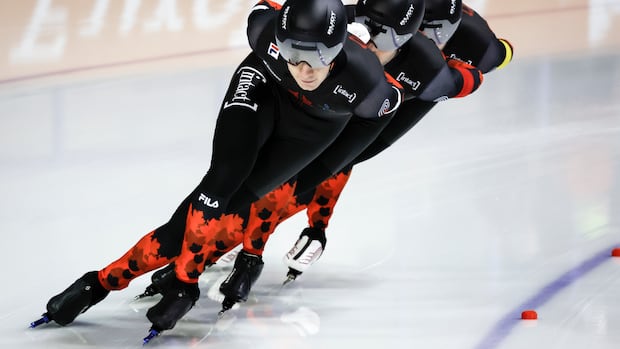
Additionally, Isabelle Weidemann, also hailing from Ottawa, a triple medalist from the Beijing Games, is entering her third Olympics in peak form, having recently finished second in the World Cup long distance standings. She is also a vital part of the reigning Olympic champions in team pursuit alongside Maltais and Blondin.
The leadership of these seasoned athletes will be crucial, especially with eight newcomers to the Olympics on the team.
It’s the fastest human-powered winter sport, and Canadians are at the forefront. The CBC’s Omar Dabaghi-Pacheco donned his skates and took to the ice to explore the true challenges of speed skating.
Olympic Heritage
Five members of the team come from families with Olympic backgrounds.
Dubreuil is the child of two Olympians, Robert (who competed in Albertville 1992) and mother Ariane Loignon (Calgary 1988).
Béatrice Lamarche’s father, Benoît, participated in the Olympics in 1984 and 1988.
Siblings Laura and Daniel Hall are following in the footsteps of their father Mike, who competed in Lillehammer in 1994.
Cédrick Brunet is the son of ice dancer Michel Brunet, who took part in the 1998 Nagano Olympics in Japan, and is the nephew of two-time Olympic medalist and Canadian chef de mission, Jennifer Heil.
Facing Adversity
Carolina Hiller-Donnelly is making her Olympic debut, but with a heavy heart following the loss of her mother to cancer last year.
Upon being named to the Canadian team, she shared on Instagram: “She wanted this for me just as much as I wanted it for myself. At the beginning of the season, I didn’t think I could compete without her. But she always encouraged me to be brave. So I made it to every start line and did it.”
David La Rue has dreamed of being an Olympian his entire life. He lost that opportunity four years ago when the 2022 Olympic skate-off was canceled due to the pandemic.
This time, his dreams appeared to be at risk again. Following a serious cycling accident in late 2023 that resulted in a brain hemorrhage, La Rue had to step away from the World Cup circuit for a year and a half (during which time he passed his CFA exams).
He returned last season determined to qualify for his first Olympics, and during the Canadian trials in January, he secured a position in the 1,500.
-
The Buzzer
How many medals will Canada secure at the Olympics?
-
Three New Brunswick speed skaters discovered their sport by chance, and now they’re on the way to the Olympics
Antoine Gelinas-Beaulieu, a 2022 Olympian, is an athlete that fans will rally behind. He was a junior short track star but faced challenges from overtraining and burnout stemming from a negative relationship with a previous coach.
After taking a four-year break from the sport, he shifted his focus to long track.
Following an impressive three-medal performance at the 2024 world championships in Calgary (gold in the team sprint, silver in the mass start, and bronze in the team pursuit), he sensed something was off when he resumed training that spring.
With the backing of the national program, he took a break and was later diagnosed with a mood disorder known as cyclothymia. He credits the encouragement from his wife, family, and coaches for helping him return to the competitive scene, prepared for his second Olympic appearance.
“I didn’t feel any judgment from them,” he shared with La Presse. “The world missed me. They were just excited for me to lace up my skates and train and compete with them again.”
Two Training Centers = Success
The Canadian speed skating team trains at two facilities: the Olympic Oval in Calgary and the Centre de Glaces in Quebec City.
For years, athletes had to relocate westward to chase their Olympic aspirations, but with the addition of another world-class facility in the east, skaters can remain closer to their homes.
Interestingly, Canadian Olympic legend Gaeten Boucher still practices at the Centre de Glaces several days each week.