
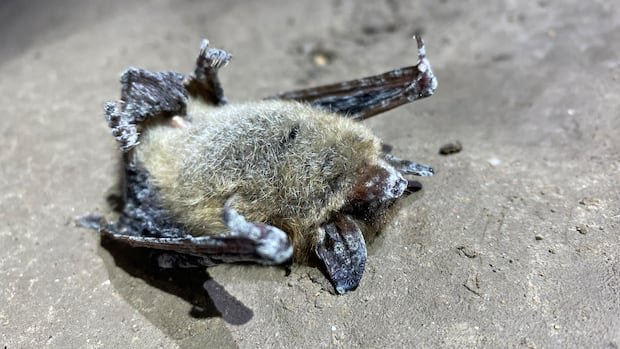
Parks Canada teams are taking action in the bat caves of Alberta by applying a mixture of bacteria to combat a deadly fungal infection that is threatening the hibernating bat population. Nina Veselka, a biologist with Parks Canada, witnessed the impact of the infection at a cave in Jasper National Park, where bats were seen falling from the walls and struggling to survive on the cave floor.
The fungal infection, known as white-nose syndrome, is a significant threat to Alberta’s bat population. This fungus thrives in cold and damp environments like bat caves, appearing on bats as a fuzzy, white growth on their snouts and wings. It disrupts the hibernation of bats, leading them to wake up and deplete their fat reserves, putting them at risk of starvation.
Veselka, along with Parks Canada’s ecological monitoring team, observed nearly a dozen dead bats near the entrance of a cave in Jasper National Park, which is home to a hibernating bat colony. The number of dead bats found was significantly higher compared to previous years, indicating the severity of the situation.
White-nose syndrome has been detected in three caves in the Rockies this year, posing a threat to bat colonies in various locations, including Cadomin, the largest known hibernation site for bats in the province. In response, teams are applying probiotics with fungi-fighting properties at the entrances of maternity roosts in Jasper and within confirmed roosting areas to slow the growth of the harmful fungus.
Veselka emphasized the importance of taking action against the disease, stating that while Alberta is treating affected bats with probiotics, British Columbia is using them preventively. The fungus causing white-nose syndrome first appeared in Europe in the early 1900s and has since spread to North America, leading to millions of bat deaths. Its arrival in Alberta in 2022 has raised concerns about the future of bat populations in the region.
Efforts to combat the spread of the fungus are ongoing, with researchers and conservationists closely monitoring the situation and implementing preventive measures to protect the bat population. Lisa Wilkinson, a bat specialist for the Alberta government, highlighted the long-term impacts of the disease on bat populations and emphasized the importance of ongoing research and treatment strategies to mitigate its effects.