
Saskatchewan wildfires have caused significant destruction, but many experts advocate for the use of planned and controlled fires as a beneficial tool for maintaining the health of the prairies.
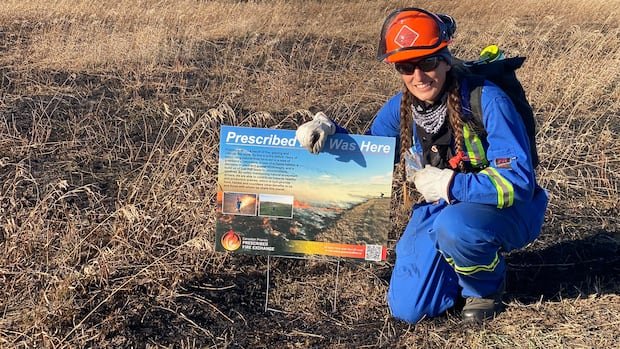
At the Brightwater Science, Environmental, and Indigenous Learning Centre near Saskatoon, Samantha Gunn, a teacher, shared with CBC’s Blue Sky how prescribed fire has been integrated into the center’s programs and management of its native prairie lands.
“Understanding the Prairie we inhabit involves acknowledging fire as a natural element,” she explained.
Prescribed burns are carefully planned, taking into account various factors such as wind conditions, temperature, humidity, seasonality, and time of day.
Renny Grilz, a resource management officer at the Meewasin Valley Authority, expressed empathy for the devastation caused by uncontrolled fires, emphasizing the potential for fire to be safely utilized in managing grassland ecosystems.
While prescribed burns can eliminate pests and revitalize food sources, the ban imposed by the Prairie Fires Act of 1898 instilled a culture of fear around the use of fire for any purpose.
Grilz, a founding member of the Canadian Prairies Prescribed Fire Exchange (CPPFE), highlighted the collective’s efforts in educating the public and land managers on the benefits of controlled fires and the traditional Indigenous practices of using fire for land management.
In collaboration with Gunn in 2019, the CPPFE facilitated training and resources to introduce prescribed burns at Brightwater, resulting in two successful controlled fires and the establishment of fire management as a vital community practice.
Gunn emphasized the importance of a trained team’s support in conducting prescribed burns and noted how fire had been reintegrated into the prairie landscapes as part of their land stewardship.
The Brightwater center has integrated fire management into its educational programs, engaging students from Kindergarten to Grade 12 in fire science and community participation.
The initiative has inspired some students to consider pursuing a career in fire management, showcasing the impact of their work in making a positive difference in land conservation and preservation.