
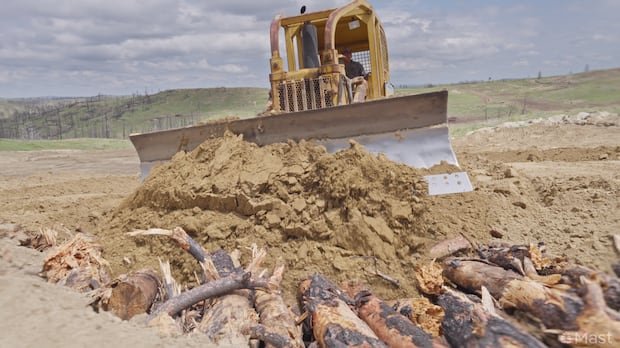
Welcome to our weekly newsletter where we showcase environmental trends and solutions driving us towards a more sustainable world. I am Nick Logan, and as a child, I used to dig holes for fun. Little did I know that it could be a climate-friendly solution. Recently, Johanna Wagstaffe and I explored the idea of burying trees affected by wildfires to trap their stored carbon.
This week’s highlights include the potential of burying burnt wood post-wildfires to benefit the climate, the impact of a heat wave on the western U.S. snowpack, and China’s advancements in electric vehicle (EV) adoption as Canada gears up to introduce these cars.
The concept of burying burnt wood after wildfires to prevent excessive carbon release has gained traction. Research by University of Maryland’s Ning Zeng in 2013 revealed the potential of burying dead wood for carbon sequestration. Zeng’s discovery of a well-preserved cedar log, over 3,700 years old, with 95% of its carbon intact, showcased the effectiveness of this method.
Inspired by Zeng’s findings, Mast Reforestation buried millions of pounds of burnt trees in Montana to prevent further carbon emissions. This initiative aims to store carbon and fund reforestation efforts by selling carbon credits. However, concerns about potential ecosystem impacts necessitate responsible and effective carbon burial practices.
In another focus, the western U.S. faced record-low snowpack levels due to a heat wave, exacerbating wildfire risks. Accelerated snowmelt is linked to longer fire seasons and severe fires, emphasizing the critical connection between snowpack levels and wildfire severity.
Transitioning to EVs, China’s innovative EV manufacturing processes, characterized by automation and battery-swapping stations, reflect a transformative shift in the automotive industry. As Canada prepares to welcome Chinese EVs, concerns about market competition and data security arise alongside opportunities for technological exchange and increased EV adoption.
The evolving landscape of carbon burial, snowpack dynamics, and EV adoption signifies crucial steps towards a sustainable future, underlining the need for responsible environmental practices and collaborative efforts worldwide.