
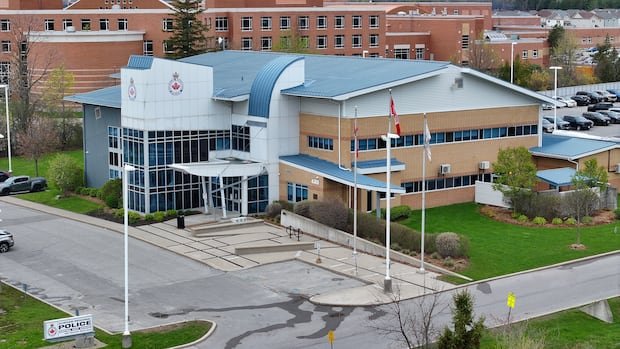
Multiple officers in Durham Region who have been diagnosed with post-traumatic stress disorder (PTSD) are expressing concerns that their recovery is being hindered by the police service’s resistance to granting them access to mental health benefits in the workplace. Chief Peter Moreira stated that the service only challenges a small number of Workplace Safety Insurance Board (WSIB) claims to obtain more information about each case.
Following the release of a six-year report by the Ontario Civilian Police Commission, it was revealed that the Durham Regional Police Service (DRPS) has been actively opposing the majority of officers’ PTSD applications to the WSIB. Despite the redacted nature of the report, officers’ testimonies were not included.
Even though the investigation began in 2019, several officers who spoke with CBC News indicated that the resistance from the service has persisted under Chief Moreira, who assumed the role in March 2023. The officers, whose WSIB claims are ongoing, have been identified using pseudonyms for their protection.
According to data from DRPS, approximately 10% of all WSIB claims, mostly related to mental health, have been subjected to intent to object forms since 2023. All six officers interviewed by CBC News had their cases objected to, with three currently in the formal appeal process.
The officers described feeling betrayed and setback in their recovery journey due to the service’s opposition to their claims, despite receiving medical assessments from reputable institutions. Psychologist Sean O’Brien, who has treated DRPS members for nearly three decades, emphasized that objections without arguments are profoundly damaging to his patients’ mental health.
Chief Moreira defended the service’s actions, citing the need to obtain timely information not readily available from WSIB due to delays. He emphasized challenges within the WSIB system since the passing of legislation in 2016, which has impacted the handling of PTSD claims for first responders.
While the WSIB allows for ongoing updates on injured workers, some officers feel that DRPS has not adequately supported their recovery. The ongoing struggles faced by officers with PTSD highlight the need for improved communication and support within the workplace.