
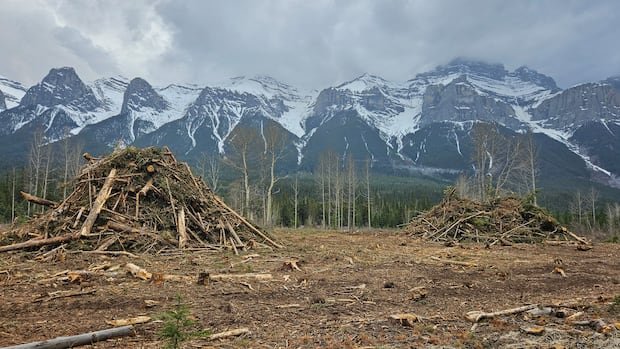
Fireguards are created to safeguard individuals and communities by clearing land to impede the spread of wildfires. Over the past five years, extensive forest areas have been cleared from Lake Louise through Banff and Canmore into Kananaskis Country, with ongoing efforts planned. The benefits of this initiative extend beyond residents and visitors to encompass wildlife like elk, grizzly bears, and birds.
Shelley Tamelin, a wildfire risk reduction manager for Parks Canada, highlighted that wildlife utilize these cleared areas for movement and feeding. The presence of humans and machinery during the construction of fireguards may temporarily deter animals, but they tend to return once the work is completed.
The newly exposed land fosters the growth of vegetation such as willows, grasses, and shrubs, providing fresh food sources and expanded habitats for various wildlife species. Bill Hunt, senior director of conservation programs at the Yellowstone to Yukon Conservation Initiative, emphasized the positive impact on nesting birds, ungulates, and bears feeding on resources like buffaloberries.
The construction of fireguards involves long-term planning, consultation with stakeholders, and environmental assessments to minimize negative impacts on wildlife. The logging activities are scheduled during frozen ground conditions from mid-November to March to protect the soil and avoid nesting seasons of birds and bats.
Furthermore, fireguards aid in guiding wildlife movement away from populated areas, reducing human-wildlife conflicts. Providing safe open spaces for wildlife to roam helps prevent animals from congregating near roads or other unsafe locations.
The Bow Valley’s growing tourism industry underscores the importance of managing human activities to coexist harmoniously with wildlife. Enhancing wildlife habitats through measures like logging and prescribed fires, as recommended in reports following incidents like bear 148’s death, plays a crucial role in maintaining ecological balance.
Efforts to monitor wildlife behavior through cameras and studies contribute to understanding how animals adapt to habitat changes. The ongoing commitment to wildlife conservation and habitat restoration reflects a collective effort to balance environmental preservation with economic development goals.
Overall, the collaboration between conservation organizations, government agencies, and local communities is essential in ensuring the sustainability of wildlife habitats and promoting responsible outdoor recreation practices in shared environments.