
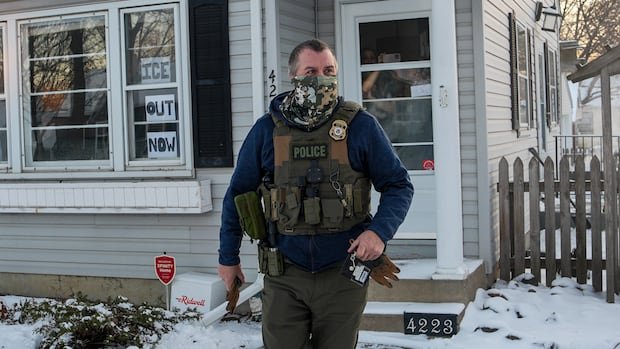
Homeland Security officers, including Immigration and Customs Enforcement (ICE) agents, will be equipped with body cameras in Minneapolis, as announced by Secretary Kristi Noem on Monday. The implementation of body cameras will be extended nationwide once funding permits, according to Noem’s statement on the social media platform X.
The move comes in response to heightened scrutiny of ICE agents’ actions in Minneapolis following the tragic deaths of two individuals. Calls for body cameras on all Homeland Security officers involved in immigration enforcement have been made by critics. In 2022, former President Joe Biden mandated that federal law enforcement officers wear body cameras, alongside other policing reform initiatives. However, President Donald Trump rescinded this directive at the start of his second term.
The recent fatal shootings in Minneapolis, including that of 37-year-old Alex Pretti, an ICU nurse, and 37-year-old Renee Nicole Good, have sparked nationwide protests. Notably, Homeland Security confirmed that at least four Customs and Border Protection officers present during Pretti’s shooting were already using body cameras.
In the wake of these incidents, the lack of transparency regarding the body camera footage from Pretti’s shooting has drawn attention. Meanwhile, discussions surrounding the necessity of body cameras have intensified, with Minnesota Governor Tim Walz emphasizing that the use of body cameras should have been in place prior to the fatal shootings.
Critics have condemned Trump’s immigration policies for their perceived lack of due process and hostile impact on immigrant communities. Trump, however, has defended his actions as crucial for enhancing domestic security. In response to Noem’s announcement, Trump expressed support for body cameras, citing their benefits in promoting transparency and accountability in law enforcement practices.
Border czar Tom Homan acknowledged past mistakes but affirmed agents’ commitment to enforcing federal law. He also called for collaboration between federal officers and local and state officials. Trump echoed his approval of body cameras for law enforcement, emphasizing their role in ensuring truthfulness and transparency in policing activities.