
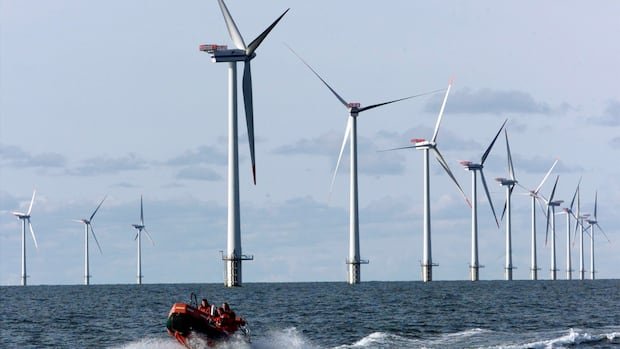
Nova Scotia is on the brink of enacting a new law that will determine the revenue generated from offshore wind projects. However, some experts in the industry believe the province still needs to address more specifics before developers will feel confident enough to invest.
A bill introduced by Premier Tim Houston mandates that offshore wind ventures pay the province $7,000 per megawatt of their turbine capacity for the initial ten years of operation. Following this period, the province may transition this requirement to a royalty based on gross revenue, with the potential rate being around four percent, although it is not explicitly stated in the legislation.
While the offshore wind industry sees Nova Scotia’s potential as enticing for many companies and finds the general framework reasonable, the proposed four percent royalty could deter some investors. Jonathan Robinson, a senior policy advisor with Marine Renewables Canada, emphasized the importance of understanding additional costs and the complexities surrounding the completion and connection of transmission lines.
Developers seek stability, but uncertainties persist in the economic landscape of offshore wind ventures in Nova Scotia, particularly concerning energy purchasers, development timelines, and the availability of federal investment tax credits.
Comparing to the United States where annual operating fees typically stand at two percent, Robinson suggests that Nova Scotia should consider a royalty closer to that figure. A spokesperson from the Department of Energy highlighted that Nova Scotia’s financial framework was formulated after studying ten countries projected to exceed five gigawatts of offshore capacity by 2032. The department described Nova Scotia’s approach as modest compared to these countries, emphasizing the province’s low upfront costs.
Notably, the proposed new legislation includes a $1 million license fee, positioning Nova Scotia favorably in terms of upfront costs when compared to its competitors. However, industry experts stress that challenges related to technical aspects such as supply chain development and port infrastructure must also be addressed for the sector to thrive.
Maria Pallard, a principal consultant with ABL, a consulting firm collaborating with offshore wind developers, emphasized the need to meticulously resolve potential bottlenecks and ensure a methodical approach to capitalize on Nova Scotia’s promising offshore wind resources.