
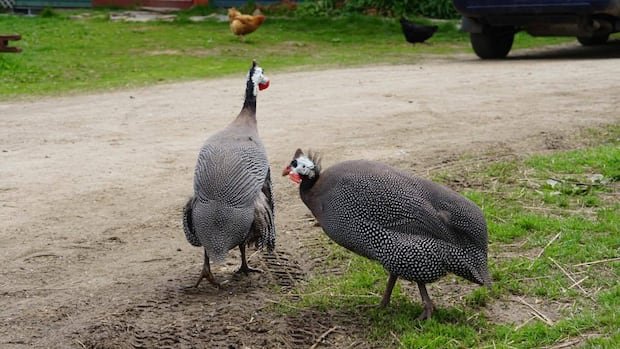
As tick populations continue to spread across Canada, more residents in Nova Scotia are seeking ways to safeguard their properties from these pests, turning to an unusual solution in the form of guinea fowl. These large, mottled birds, closely related to chickens and turkeys, are renowned for their insatiable appetite for insects and are now being increasingly utilized as natural pest controllers.
Heather Squires, a guinea fowl breeder near Lunenburg, N.S., has been raising and supplying these birds for over a decade. This year, she has experienced a surge in inquiries, selling around 70 baby guinea fowl, known as keets. The heightened demand has forced her to pause sales to ensure an adequate number of birds for tick control on her own farm, where tick sightings are rare despite being in Lunenburg County.
The uptick in interest has attracted new breeders like Phalen MacLean, who started hatching guinea fowl at her residence in New Glasgow. MacLean noted a considerable decline in the local tick population as her flock grew to 13 birds.
Nova Scotia was identified last year as having the highest tick infestation in Canada, with a corresponding increase in anaplasmosis cases, a tick-borne illness, reported by veterinarians over the past decade.
Bruce Rathgeber, a professor at Dalhousie University’s faculty of agriculture, mentioned that while using guinea fowl for tick control is not a novel concept, the current surge in ticks is unprecedented for the region. Rathgeber, who has experience raising fowl, believes that while the effectiveness of guinea fowl in reducing tick populations is debatable, they can serve as a supplementary control measure. Published research suggests that managing landscapes, such as maintaining short grass and clearing wooded areas away from homes, is a more reliable method of tick control.
Guinea fowl are notorious for their loud nature, challenges in breeding in captivity, and questionable intelligence. They have a tendency to nest in hidden spots and sleep in trees, even during snowstorms, making them vulnerable to predators. To address this issue, Squires recommends confining the birds indoors for three weeks to train them to return home at night, akin to chickens. She also believes guinea fowl excel over chickens in pest control as they consume bugs directly from leaves without causing damage to vegetation.
Both breeders stressed the importance of providing ample space for the birds to roam freely. Potential owners should consider yard size and proximity to neighbors before acquiring guinea fowl, as living near busy roads poses a danger to the birds due to their lack of road awareness.
In conclusion, guinea fowl are increasingly being recognized for their potential in tick control, although their efficacy in curbing tick populations remains a subject of debate among experts. They offer a natural and sustainable alternative for managing ticks in residential areas, alongside other landscape management practices for effective tick prevention.