
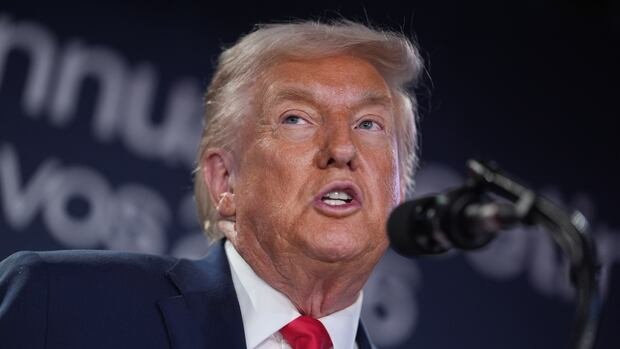
U.S. President Donald Trump made an announcement on Wednesday, revealing the cancellation of the proposed tariffs on European allies in light of discussions regarding U.S. control over Greenland following a meeting with NATO’s leader. This change in direction occurred shortly after Trump expressed his desire to obtain Greenland’s rights and ownership without resorting to force, while also criticizing European allies and emphasizing NATO should not hinder U.S. expansionism.
Trump highlighted that achieving control over Greenland might require excessive force for success, although he clarified that he did not intend to pursue such aggressive measures. The President reiterated his stance that the U.S. must secure Greenland to address potential threats in the Arctic region posed by Russia and China, despite the existing U.S. military presence on the island.
NATO, established by key European nations, the U.S., and Canada to counter the Soviet Union, has consistently maintained that Greenland is not for sale and cannot be separated from Denmark. This stance could potentially lead to a broader geopolitical confrontation following Trump’s recent statements.
Greenland’s government responded to the situation by advising citizens to prepare for potential crises. They have issued handbooks in English and Greenlandic detailing necessary actions to take during emergencies, urging residents to stock up on essential supplies like food, water, fuel, and provisions to sustain themselves for a five-day period.
Amid these developments, Trump called on Denmark and other NATO members to step aside and issued a cautionary message. He urged immediate negotiations for the U.S. to acquire Greenland, emphasizing the importance of world protection and security.
Furthermore, Danish Foreign Minister Lars Løkke Rasmussen expressed optimism regarding Trump’s reluctance to resort to military force. However, he criticized certain aspects of Trump’s address, suggesting a misalignment between Trump’s territorial integrity views and established institutions. Trump also contrasted the robust state of the U.S. economy with what he perceives as a downturn in Europe, emphasizing the need for strong allies rather than weakened ones.