
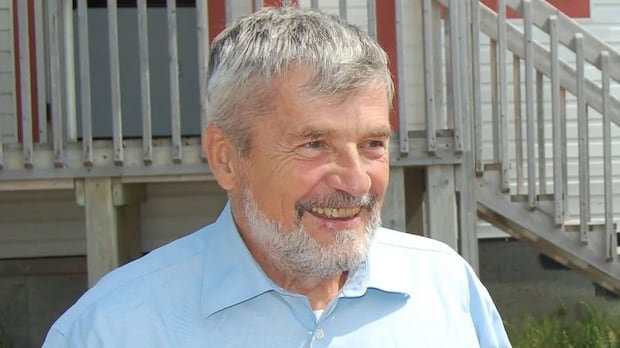
Renowned archaeologist Robert Grenier, recognized for his groundbreaking work in underwater exploration, has passed away. Grenier’s notable discovery was the Basque whaling ship San Juan in Red Bay, Labrador, in the 1970s, with information provided by a researcher. Recalling the experience in an interview with CBC Radio’s “The Broadcast,” Grenier described the thrill of exploring the wreck, likening it to unveiling a 16th-century snapshot in Red Bay.
Hailing from Trois-Rivières, Que., Grenier earned a master’s degree in classics from Laval University before joining Parks Canada, where he became a trailblazer in the emerging field of underwater archaeology. His obituary confirms his passing on Jan. 3 in Gatineau, Que., at the age of 88.
Initially learning of the San Juan in 1974 through a communication from researcher Selma Barkham, who had uncovered archival evidence in Spain, Grenier delayed acting on the lead while engrossed in researching the British ship HMS Sapphire in Bay Bulls, N.L. However, in 1978, his team set out to Red Bay and swiftly located the San Juan in the frigid waters.
Grenier emphasized that the wreck, unlike the sensationalized Titanic, lay in shallow waters near Saddle Island’s shoreline, preserved by the icy conditions and ice encasement. Red Bay town manager Keith Pike, who witnessed the discovery as a child, praised Grenier’s character and contributions, highlighting his respectful demeanor towards all.
Acknowledged as a key figure in underwater archaeology and conservation by Newfoundland and Labrador’s provincial archaeology office, Grenier led expeditions in the Arctic in the 1990s and 2000s in search of Sir John Franklin’s lost ships, HMS Erebus and HMS Terror. Honored as an officer of the Order of Canada in 2004, Grenier chaired an UNESCO committee focusing on underwater cultural heritage protection.
Notably, the survey of the San Juan wreck facilitated the construction of a replica vessel, scheduled to embark on a voyage to Labrador in 2027. Grenier’s legacy encompasses his leadership at Parks Canada’s underwater archaeology unit and his feature on the cover of National Geographic in 1985.