


This week’s edition of Quirks & Quarks features Bob McDonald:
Voyager 1 nearing historic milestone of one light-day distance
On November 18, Voyager 1 will be positioned 25.9 billion kilometers from Earth, marking the first time a human-made object achieves a distance of one light-day. Bob McDonald recalls watching the launch of Voyager 2 from Cape Canaveral, Florida, on August 20, 1977, alongside Jon Lomberg, the artistic director responsible for the Golden Record, which is included on both spacecraft. They reconnect to discuss the launch and the significance of the endeavor. Joe Westlake, who serves as a space physicist and head of NASA’s heliophysics division, describes how the Voyager missions continue to yield groundbreaking scientific insights about our galaxy, nearly half a century later.
Accelerating renewable energy could prevent a ‘global meltdown’
As the annual U.N. climate change conference commences in Turkey, the world is on the brink of exceeding the Paris Agreement’s target of limiting global warming to 1.5 degrees Celsius. Experts emphasize that international efforts to cut carbon emissions must intensify to prevent a “global meltdown.” John Pomeroy, a hydrologist at the University of Saskatchewan, discusses his new research published in Science regarding the vulnerability of the planet’s polar regions, warning that even if we manage to stabilize at 1.5 degrees, it might lead Canada into a “very bad spiral, into dysfunction.” Additionally, a study in Nature Climate Change by Corinne Le Quéré, a Canadian climate scientist at the University of East Anglia, reveals that from 2019 to 2025, 59 nations, Canada included, have managed to decrease their carbon emissions while also boosting their GDP. However, she stresses that much more progress is necessary in the shift towards renewable energy.

Recent studies indicate that while some strides have been made in transitioning from fossil fuels to clean energy, a quicker pace is essential to avert a ‘global meltdown.’ (Jeff McIntosh/The Canadian Press)
Scientists uncover compelling evidence of dinosaur blood
A team of researchers has reported the finding of fossilized blood remnants within a 115-million-year-old dinosaur femur. Led by Kliti Grice, a geochemist from Curtin University in Australia, the team discovered molecular traces of heme, an iron-containing molecule present in blood, inside the dinosaur bone. Subsequent investigations revealed microscopic formations resembling red blood cells, in addition to other chemical signatures indicative of blood. The research team, employing 30 different techniques, released their findings in the journal PNAS. Grice highlights that these findings provide substantial evidence that certain biomolecules can endure far longer than previously believed under specific burial conditions.

Researchers have detected evidence of dinosaur blood preserved in this unremarkable thigh bone for 115 million years. (Curtin University)
Exploring the links between humans and birds through feathers
Throughout human history, birds have played a significant role — appearing in our art, adorning our clothing, and featuring on our menus. However, this fascination has contributed to their decline and even extinction. Studies indicate that the North American avian population has decreased by nearly three billion adult breeding birds from 1970 to 2019. Pete Dunne, the former director of the Cape May Bird Observatory in New Jersey, has authored over 20 books on birds, with his latest being Under Their Wing: How birds shape the human experience.

Acclaimed birder Pete Dunne delves into the myriad ways human history has intertwined with birds in his book Under Their Wing: How Birds Shape the Human Experience. (Chelsea Green Imprint / Penguin Random House)
Genetic makeup influences medication responses
It’s often uncertain how your body will react to a new medication until you actually take it. For certain drugs, the effect may vary due to an individual’s genetic makeup. While researchers have identified connections between specific genes and drug responses, this knowledge is not frequently applied — partly due to a lack of comprehensive data on the prevalence of these genetic variations worldwide. In a recent study published in Science Translational Medicine, Philip Empey, an associate professor at the University of Pittsburgh, and his team examined a diverse group of 100,000 Americans from various ancestral backgrounds to gain insights into the commonality of these genetic differences.
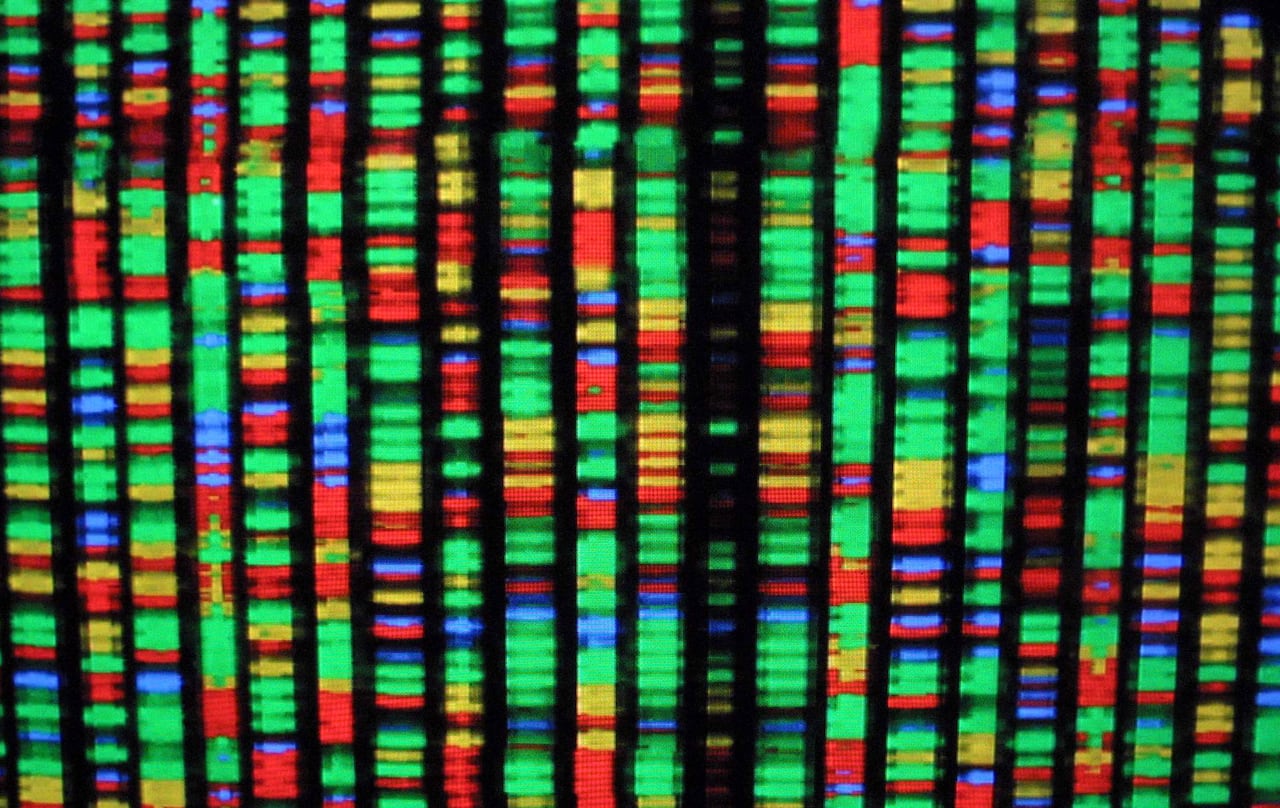
A visual representation of the human genome. (Mario Tama /Getty Images)
Tag: rewrite-pending