
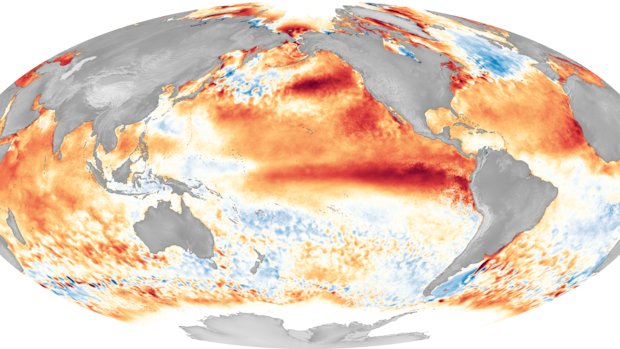
A potentially strong El Niño, dubbed a “super” event, is being discussed, which could raise global temperatures and worsen extreme weather conditions. Multiple climate models are predicting a robust El Niño starting in June or July, peaking in November, with Pacific Ocean temperatures in a key region possibly rising 2 degrees Celsius above normal, with some models suggesting even higher deviations.
El Niño is part of the El Niño-Southern Oscillation (ENSO) system, influencing global weather patterns. Warmer temperatures in the Niño 3.4 region of the Pacific Ocean signal an El Niño event, while cooler temperatures indicate La Niña, with a neutral phase also existing.
The U.S. National Oceanic and Atmospheric Administration (NOAA) has issued an El Niño watch, with an 82% chance of development between May and July and a 96% probability of continuation from December to February, although peak strength remains uncertain.
Under typical conditions, Pacific trade winds push warm water westward, but during El Niño, weakened trade winds reverse this process. While a strong or even ‘super’ El Niño may be on the horizon, its impact on Canada this summer is expected to be minimal, though global repercussions are anticipated.
El Niño’s effects are usually felt in Canada during winter, with warmer temperatures across the country. The previous record El Niño in 2023-2024 resulted in Canada’s warmest winter, and a potential El Niño in 2027 could bring even higher temperature anomalies.
Climate scientists emphasize that the combination of ongoing global warming and an impending El Niño could lead to unprecedented weather extremes, with 2027 likely to break records. While El Niño may trigger extreme conditions, the primary concern remains climate change, which intensifies with continued fossil fuel consumption.
The El Niño phenomenon is expected to affect global weather patterns, potentially leading to a calmer hurricane season in Atlantic Canada but posing an increased wildfire risk in the drought-stricken western regions. Experts warn of rising fire hazards in Canada, emphasizing the link between climate change and extreme fire weather conditions.