
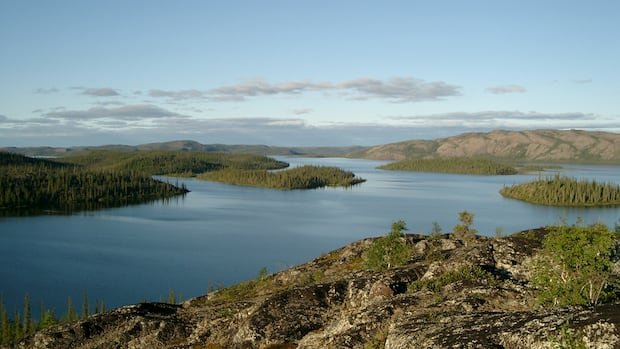
A recent study suggests that the algae population in Great Bear Lake, Northwest Territories, has undergone significant changes due to climate change since the early 2000s. The study, published in the Proceedings of the National Academy of Sciences journal, highlights the impact of increased ice-free days and rising air temperatures on the lake’s algae community.
According to John Smol, a biology professor at Queen’s University and co-director of the Paleoecological Environmental Assessment and Research Lab (PEARL), the altered algae composition could have varying effects on the lake’s ecosystem. While the reduction in ice cover may lead to more total algae and food availability, the specific implications are not yet fully understood.
The research team analyzed sediment core samples from different areas of Great Bear Lake to track changes in the algae species over time. They observed a transition from shallow-water algae common in ice-covered lakes to species thriving in open water. Similar shifts were noted in Lake Hazen and Great Slave Lake in the region.
Despite the large size of these lakes, comparable to the country of Belgium, researchers were surprised by the rapid ecological transformations observed. Environmental scientist Reid Stoyberg, who has extensive experience on Great Bear Lake, acknowledged the lack of conclusive data to assess the impact on fish populations and other aquatic organisms.
Stoyberg emphasized the importance of continued research to monitor and understand the evolving dynamics of Great Bear Lake’s ecosystem. He highlighted the necessity for species to adapt to environmental changes in order to survive in the demanding conditions of the lake.