
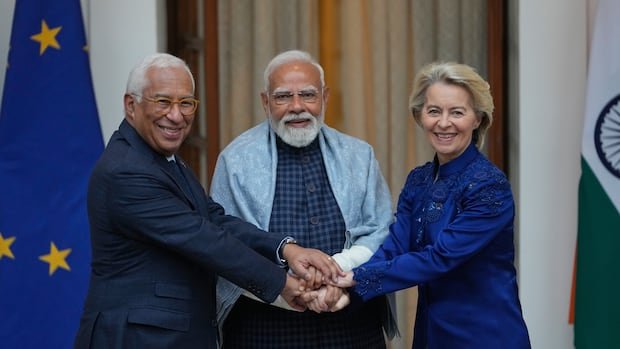
European Union and Indian leaders have officially announced a comprehensive trade deal following almost twenty years of intermittent negotiations. The urgency of reaching an agreement heightened in the past six months due to significant tariffs imposed by U.S. President Donald Trump. Indian Prime Minister Narendra Modi and Ursula von der Leyen, president of the European Commission, hailed it as a monumental achievement, dubbing it “the mother of all deals.”
The trade pact, described as the largest and most extensive in India’s history, covers a third of global trade. Notably, the agreement reduces tariffs on nearly 97% of European goods imported to India by value. Projections indicate that this deal will double European Union exports to India by 2032, creating a market for two billion people, as von der Leyen noted during the announcement.
The announcement coincided with India’s Republic Day parade, where European dignitaries were honored guests, symbolizing strategic priorities. The deal aims to dismantle India’s longstanding trade barriers, providing access to the domestic market for various European products, including cars. Tariffs on European vehicles such as Volkswagen, Renault, and Mercedes-Benz will see a significant reduction, from as high as 110% to 10%.
Conversely, New Delhi stands to benefit from eliminated tariffs on textiles, leather, gems, and jewelry entering the EU. Additionally, the agreement promises easier access for highly skilled Indian professionals to work in Europe, marking a significant win for the Indian labor force. Von der Leyen emphasized that the deal sends a strong message of cooperation amid global challenges and aims to reduce strategic dependencies in an era where trade is increasingly politicized.
The EU-India negotiations gained momentum in response to the trade uncertainties created by the Trump administration’s policies. The U.S. administration’s imposition of tariffs accelerated talks between EU leaders and India. The EU faced threats of additional tariffs from the U.S. after opposing President Trump’s ambitions to acquire Greenland. India, in turn, embraced discussions with various foreign leaders to diversify trade ties amid growing U.S. pressures.
This landmark agreement reflects the evolving global economic landscape, with both sides eager to secure a deal swiftly. Notably, the deal sidestepped contentious issues like access to India’s agricultural and dairy sector to expedite the signing process. The formal agreement signing is scheduled for later this year, with implementation expected by early 2027 following legal scrutiny.