
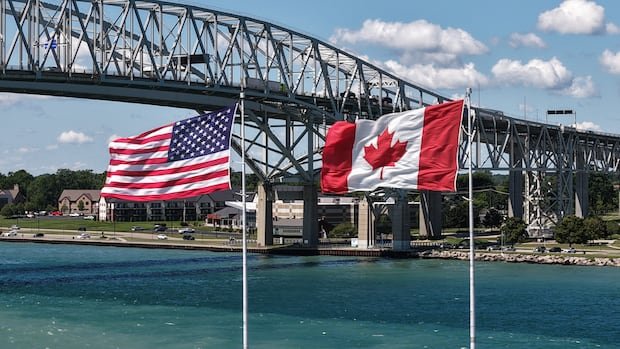
The recent actions by the White House have intensified the trade conflict between Canada and the U.S., involving bans on Canadian dairy, motorcycles, and some alcohol imports, accompanied by additional 50 per cent tariffs on various products. Analysts suggest that these measures will have a limited direct impact on the Canadian economy, although specific industries may face challenges and uncertainties.
The retaliatory moves by the White House were in response to Canada’s counter-tariffs and included bans on certain goods and increased tariffs on items such as mattresses and paper products. According to economic analysis, the new tariffs will affect around $3 billion worth of Canadian goods, while removed tariffs amount to approximately $2 billion. Despite Canada’s substantial export volume to the U.S. in 2025, totaling over $527 billion, the difference in tariffed goods is relatively small.
The bans on dairy, motorcycles, and alcohol are expected to have minimal effects as Canada’s dairy and motorcycle exports to the U.S. are limited. Alcohol exports, though higher at $550 million last year, would see an impact on only $700 million worth of Canadian exports. This has been perceived as a symbolic move by the U.S. administration, rather than a substantial economic shift, according to experts.
The rise in oil prices due to tensions in the Middle East poses a greater economic risk than the new U.S. tariffs, as highlighted by analysts. While the overall impact may be modest, certain industries and regions within Canada could still experience significant repercussions. Business owners in affected sectors may face challenges, despite some relief from items removed from the tariff list.
For the alcohol industry, which heavily relies on exports to the U.S., the continued targeting is a cause for concern. However, many alcohol products were already subject to 50 per cent tariffs, making a transition to a complete ban less impactful for producers. Similarly, other banned items facing existing tariffs may not see a substantial change in market access.
The indirect effects of the escalating trade tensions are expected to be more significant in terms of undermining business confidence. Despite the relatively minor direct economic impact, the uncertainty created by the ongoing trade dispute could have lasting implications for businesses on both sides of the border. The swiftness of the newly announced measures leaves limited time for adaptation, adding to the challenges faced by affected industries and stakeholders.